मन्दिर · Temples text
Kamakhya Temple: The Womb of the Cosmic Mother (Maha Shaktipeeth)
A comprehensive guide to the Kamakhya Temple in Assam. Discover the deep Tantric roots, the legend of Sati's sacrifice, and the mysteries of the Ambubachi Mela at this supreme Shaktipeeth.
August 5, 2026 42 views Sanskrit
Available in:
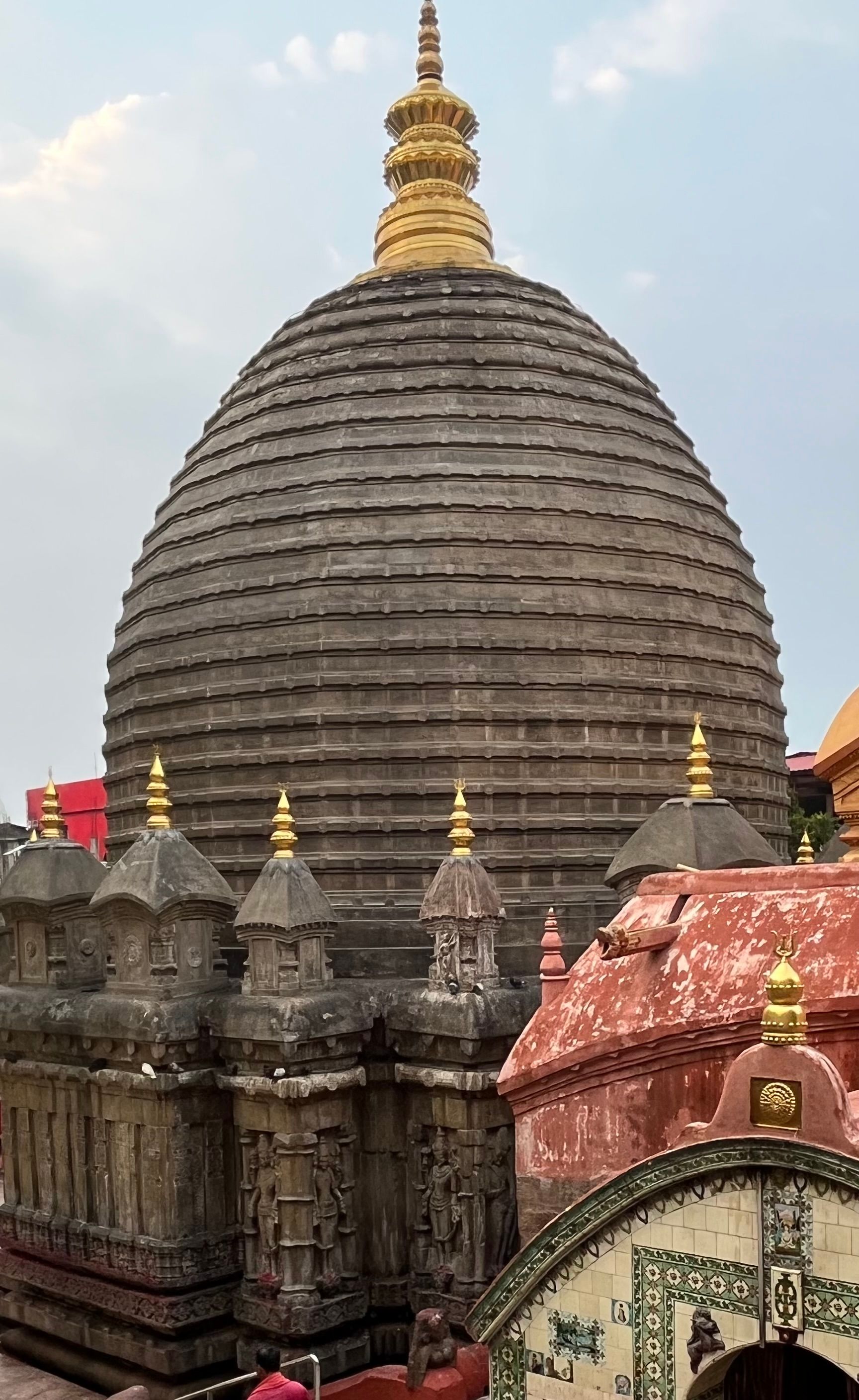
Perched atop the lush Nilachal Hill in Guwahati, Assam, the Kamakhya Temple is not merely a temple; it is the beating heart of Tantric Hinduism. It is the most sacred of the 51 Shaktipeethas (the divine seats of the Goddess) and is revered as a "Maha Shaktipeeth."

Unlike temples dedicated to the Heavens, Kamakhya is deeply connected to the Earth, celebrating the divine feminine power of creation, fertility, and absolute cosmic energy (Shakti).

---
THE LEGEND OF ORIGIN: THE FALL OF SATI

The origin of all Shaktipeethas is tied to one of the most tragic and powerful stories in the Puranas: The Daksha Yagna.

Goddess Sati, the first wife of Lord Shiva, attended a grand fire sacrifice (Yagna) hosted by her arrogant father, King Daksha. When Daksha brutally insulted Lord Shiva in front of all the gods, Sati could not bear the humiliation. Calling upon her yogic powers, she stepped into the sacred fire and immolated herself.

Consumed by apocalyptic grief and rage, Lord Shiva picked up Sati's charred body and began the "Tandava"—the cosmic dance of destruction. To save the universe from Shiva's wrath, Lord Vishnu used his Sudarshana Chakra to gently cut Sati's body into 51 pieces.

Wherever a piece of her body fell on earth, a Shaktipeeth was formed. The Nilachal Hill is the exact location where Sati's *Yoni* (the womb or female reproductive organ) fell. Thus, Kamakhya became the ultimate center of creation and the most powerful shrine for worshipping the Divine Mother.

---
THE ARCHITECTURE AND THE CAVE SANCTUM

The current temple was rebuilt in 1565 by Chilarai of the Koch dynasty after older structures were destroyed by invaders. It features a unique, hybrid architectural style known as "Nilachal architecture," recognizable by its massive, hemispherical, beehive-like dome adorned with intricate sculptures of Ganesha and other deities.

1. The Subterranean Garbhagriha
The most unique aspect of Kamakhya is what lies inside the sanctum sanctorum. There is no carved statue or physical idol of the Goddess to worship. Instead, devotees walk down a flight of steep, dark stone steps into a subterranean cave. Inside this dimly lit cave is a bedrock fissure (shaped like a yoni) that is continuously fed by an underground natural water spring.

Devotees touch the water and the stone, offering flowers and vermillion (sindoor), worshipping the living, natural manifestation of the Mother of the Universe.

---
FESTIVALS AND RITUALS: THE AMBUBACHI MELA

Kamakhya defies many orthodox Hindu taboos, most notably surrounding menstruation. The temple celebrates the natural biological cycle of women through its most famous festival, the **Ambubachi Mela**, held annually in June during the monsoon season.

According to tradition, the Goddess Kamakhya undergoes her annual menstrual cycle during these days. The temple doors are strictly closed to the public for three days. It is said that the underground spring water flowing through the sanctum naturally turns red during this time.

On the fourth day, the temple doors are thrown open in a massive celebration. Devotees from all over the world, especially Naga Sadhus and Tantric mystics, gather to receive the ultimate blessing: a small piece of red cloth (Rakta Bastra) that was placed over the sacred stone during the three days. Wearing or keeping this cloth is believed to bring immense protection and prosperity.

---
CONCLUSION

The Kamakhya Temple completely shifts the perspective of worship. It does not look up to the sky for salvation; it looks down into the earth, honoring the biological and cosmic reality that without the womb of the Mother, the universe simply would not exist. It is a bold, mysterious, and immensely powerful center of Sanatan Dharma.